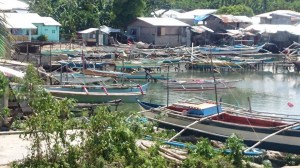
 It has been over two years since Typhoon Haiyan, one of the strongest typhoons in recorded history, devastated parts of the Philippines but even as I write this sentence I don’t think it can ever really capture what truly happened in the Philippines on November 8th 2013 or what has happened since and happens still every day.
In September 2015 I spent 10 days travelling around Eastern Samar; one of the poorest regions in the Philippines and the area most affected by Typhoon Haiyan, known locally as Yolanda. Myself and my colleagues met with our partners who introduced us to the people they have been serving in the aftermath of this typhoon.
I learned many things during this trip, I learned about how our partner NGOs provide child friendly spaces for children. I learned that they are helping people to rebuild their livelihoods and send their children to school, that they are rebuilding homes and providing shelter. That they are advocating for child protection, for evacuation centres and stronger houses.
But what I really learned was how this happens and how behind each of these words or initiatives are people. People who work day and night to ensure that others have somewhere safe to live, who have left their own homes and families to move to a different part of the country so they can help communities rebuild their lives. People who keep going regardless of how tired they are, and who can still smile, in the face of coping with such tragedy. I met the people who benefit from this work, many who were already living in poverty before the typhoon struck. Often we speak of those affected by disasters but with so much going on in the world today, sometimes it is easy to forget that they are people; people with hopes and dreams who laugh and cry, who want their children to go to school and to have a home that is safe.
But standing on what is known as Ground Zero of the typhoon, looking out to the sea that now looked so calm and yet had ravaged so many communities and took so many lives I realised once again that people are at the heart of everything. And that I was in the company of extraordinary people.
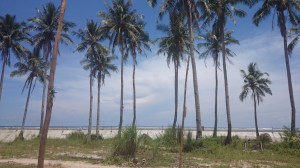 I stood on the spot where 2000 people lost their lives, I visited a mass grave and walked by areas of beach where people had to be buried where they lay. And every time, without fail I was amazed by the resilience I saw in the midst of such sadness. The faith of pastors who as they told their stories cried whilst giving thanks to God for all they had. Even though they had lost everything. The farmer who had his whole livelihood wiped out but started again with nothing but a salvaged solar battery, and who now shares his farm with the community and teaches farming skills. The hope in a mothers eyes that her child will go to school even though the odds seem stacked against her.
But this is the legacy of Typhoon Haiyan; that people who have lost so much are still going, are rebuilding their lives, are preparing for future disasters and are still, in the midst of everything thankful and turning their eyes upon God.
The following stories belong to the people of Eastern Samar, the unsung heroes of disaster; the social workers, the pastors and shepherds of every faith, the community workers, the anti-trafficking volunteers, the leaders of NGOs and the men, women and children who refuse to give up.
First published for Tearfund Ireland, in Teartimes, Autumn 2015 Edition
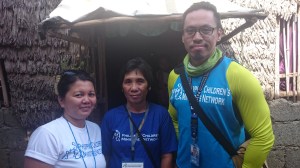 Every now and then you meet people who change your life, not dramatically or forcefully but just meeting them changes you. Changes how you see the world, how you see yourself.
 ilooktothehills