I sat in a community centre somewhere in Eastern Samar, a one roomed building looking out to sea. The heat beamed through the bamboo walls, light flickered around the room, children’s pictures and the alphabet filled the walls. Even now if I close my eyes I am transported back there. I can feel the heat of the sun, the gentle breeze of the fan hitting off my skin, the bright light of the sun coming through the open doorway and the unsure expectation of what was about to unfold.
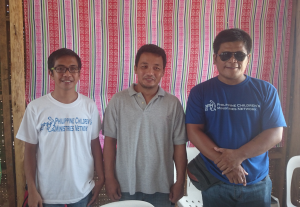 Three men sat opposite us, all three had a story to tell, all three had shared an experience I could only imagine. The kind of story that shows up both in dreams and nightmares. A strange mingling of terror and the miraculous. Each were pastors and each had lived through the typhoon and the accompanying tsunami. Each had lost friends, neighbours and members of their congregations but each had an amazing story to tell.
The first pastor began, he looked younger than me and when he smiled you could feel his kind spirit fill the room. He told us that he was in his home with his family when the typhoon started and as the waters began to rise he realised they needed to evacuate. He gathered up what he could of their possessions and prepared his family to leave but when he came to his grandad, his grandad said no. He told this young pastor, his grandson, to take his wife and to run, to leave him behind. That he was too slow and too old, that he would only slow them down. There wasn’t time to save them all. As I listened I thought of my dad at home in Ireland, I imagined him telling me to leave him behind, to run and save myself. Imagined him pushing me away, yelling at me to go and not to look back, his unconditional love overtaking. I looked at this pastor before me, his tears freely falling as he told us of his impossible choice. He knew time was running out for them but he also knew he wasn’t going anywhere without his grandfather. So he carried him on his back, through the storm and the howling wind, the beating rain and the rising waters and he saved his life and the lives of the rest of his family. He made what was at the same time an impossible choice and yet the easiest choice. To leave no one behind, to fight for survival, to fight for the people he loved and miraculously they all survived. They lost everything that night but as the next day dawned and a different struggle began they knew they had each other and that nothing could break the bonds of family and of love.
As this story sank in, the next pastor spoke, he told us that when he heard the typhoon was coming the first thing he did was go to his church and check on the people in his congregation. But he got caught in the storm and had nowhere to go. The tsunami had hit and as he swam to try and find safety he saw two children struggling in the water, separated from their parents, struggling to survive. He grabbed them, and carrying one on his back and another under his arm he swam them to a tree and the three of them clung for their lives to the top. They were battered by the wind, the gusts of this typhoon reaching over 200kph, but they survived, he saved their lives. In our world today we talk about superheroes, we watch movies about Captain America and Ironman and yet we sit in the presence of heroes everyday and don’t even notice. People like this man who put his life on the line for others. Who risked his own safety to put his church and his community first and who without a seconds thought saved the lives of two children with no thought for his own. This man who sat humbly between his friends, confused at the expressions of amazement that he met in our eyes.
The third pastor finally spoke, he had said very little while we were there and his expression had remained steady throughout. He looked at us from behind dark glasses, a towering figure at the end of the table. But as his story spilled out so too did his heart. He told us about his little girl, born just two months before the typhoon. He told us how during the typhoon the only place they had to go was the roof of their house. He told us that his precious little girl survived the typhoon, she survived the cold and the rain, the wind and the chaos. She survived the three week wait for rescuers to reach their village. Her mother eating airdropped supplies of biscuits and packaged coffee to keep her own strength up so she could feed her baby until help arrived. He told us with beaming pride that today she is two and full of mischief and delights. A miracle baby who is blissfully unaware that she survived the worst typhoon in recorded history.
Each of these men struggled in the aftermath of the typhoon, with all they faced, the rebuilding of their churches and communities both physically and spiritually. The losses their villages had experienced, the trauma they had all faced. But they found strength in each other and in God. They meet each week and support each other, each understanding the pain they all feel and sharing in the trauma of what they had encountered. They were strangers before this typhoon but today they sat together as brothers, united by a bond that goes beyond friendship and kinship but to something much deeper and stronger.
And for a little while they invited us into that, they allowed us into their world. And what a beautiful world it is. A world where ordinary men became heroes and where those who have lost so much are the most grateful I have ever met.
I will never forget these pastors three, the hope they radiated, the thankfulness of their hearts and the humility in the heroics of their actions.
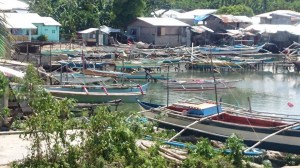 It has been over two years since Typhoon Haiyan, one of the strongest typhoons in recorded history, devastated parts of the Philippines but even as I write this sentence I don’t think it can ever really capture what truly happened in the Philippines on November 8th 2013 or what has happened since and happens still every day.
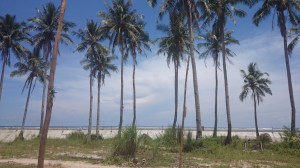 I stood on the spot where 2000 people lost their lives, I visited a mass grave and walked by areas of beach where people had to be buried where they lay. And every time, without fail I was amazed by the resilience I saw in the midst of such sadness. The faith of pastors who as they told their stories cried whilst giving thanks to God for all they had. Even though they had lost everything. The farmer who had his whole livelihood wiped out but started again with nothing but a salvaged solar battery, and who now shares his farm with the community and teaches farming skills. The hope in a mothers eyes that her child will go to school even though the odds seem stacked against her.
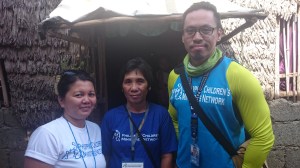 Every now and then you meet people who change your life, not dramatically or forcefully but just meeting them changes you. Changes how you see the world, how you see yourself.
 ilooktothehills