How will I be remembered?

Recently I have been thinking about how I would like to be remembered, what my legacy on this earth will be. What people would say about me? I think they would say that I worked hard, that I loved my job, that I was passionate about justice, about ending poverty, about people’s rights.

But what would they say about me-as a friend, as a colleague, as a sister and a daughter or an aunty? For the last few weeks I have stood up in front of people and given talks about what it is to really love people, to really live a life where we love our neighbours as ourselves. In the context of my job and the work we do this is really important. We ask people to care about people living in poverty, people trapped in conflict or slavery. We encourage people to become involved in their own communities, to care for the homeless, the drug addicted, the lonely. I ask people to live a life where they put other people’s needs first. But the more I have given this talk the more I am asking myself if I do that. Do I live a life where I put others first? Do I love the people around me unconditionally?

You see it is easy for me to love people who are far away, to love refugees and people trapped in prostitution or living in poverty on the other side of the world. It is easy for me to stand up for their rights, to give 110% to my job, to encourage others to look beyond themselves-to people who are hurting around the world. But I realised, as I drove home from a talk one Sunday that loving the people who are around me is much harder. Showing mercy and grace to my friend when they hurt me or my colleague when they upset me is much more difficult. Being a neighbour to my actual neighbours is so much harder. Because it requires much more of a sacrifice. It means I have to have patience and respect and show people grace when I don’t want to, when I don’t feel like they deserve it. But isn’t this what we are called to do, isn’t this what society and communities should all be about. If you are a Christian or a person of faith you are called to live your life like Jesus. And even if you’re not, Jesus is still a pretty good benchmark for how we should treat each other, of what loving your neighbour should actually look like. Forgiveness, grace, mercy, non-judgemental patient unconditional love. What if we were all to live our lives like this? What would the world look like?

I saw a video on Facebook at the weekend, it was a little cartoon and the premise was- if you are not getting what you want from a friendship or a relationship then leave. If your needs are not being met then walk away. Because you deserve more and that person is of no use to you. And it made me think, it is not a bad message. If you are being hurt, if someone in your life is genuinely not good for you, if you are being physically, mentally or emotionally abused or used then absolutely that needs to not happen. But the real crux of this video was less about that, how we can protect ourselves from people who may hurt us and more just about ‘me’. The idea of ‘me’. There is a line from a song that talks about ‘a generation, a fascination of I, me and mine’ and I can’t help but feel like that is our starting point and end point sometimes. Me. It is my starting point and end point. I love my friends, my family, my colleagues and I would do anything for them. But do they always know that? Do my words and actions always reflect that?

I don’t think they always do. My colleague in work and one of the wisest, most gracious women I know, says that before you say anything you should ask yourself three things-is it kind, is it necessary, is it true and if it doesn’t fill one of those criteria then don’t say it. I fail at this, constantly and consistently but I am endeavouring to do it. We live in a country where one in five children are being bullied online, where people are so hurt and so broken our suicide rates are some of the highest in Europe. Where 450,000 people suffer from depression. Our country is in the depths of a homeless crisis like we have never before seen. What would our country, this world, look like if we all started to love our neighbours a little bit better? If we checked ourselves before speaking? What would it look like if I stopped thinking about me and started thinking about you? If instead of getting frustrated and annoyed I asked my colleagues how they are. If when my friend says something that may hurt me, I stop myself before hurting them back. What would happen if we all began to love unconditionally, to love without limits, to love extravagantly? To forgive, to let go.

I recently spent time in Ethiopia meeting with women who are part of a self-help group model of poverty alleviation. They have inspiring, jaw dropping stories of how their lives have been turned around. Of how they have gone from being the poorest of the poor with no money, no hope and no future to being able to send their children to school and college, to being able to feed their families three meals a day. The material and economic difference in their lives is nothing short of a miracle. But every time I left one of these groups; that was never the thing that was at the forefront of my mind or my heart. Every single time, without fail, I came away blown away by their love for each other. Their bond, their unfailing love and friendship. These women would do and have done anything and everything for each other. On one occasion we sat in a room, surrounded by these beautiful women, we had two words of Amharic, they had no English. But as one lady started to tell her story the whole room hushed. She spoke in her native language and we had no idea what she said but as she said it, we cried. Because as she spoke the other women hugged each other and cried, the women closest to her touched her and held her. And even though we couldn’t yet understand her story, we knew that these women had travelled a long road together, a road of pain and suffering. But they were still there, feeling each other’s pain, sharing in each other’s joy.

This lady had lost everything; her grown up sons, her husband, her livelihood and is currently losing her health. But she told us of the great love of her self-help group friends, the love of the women around her who have carried her through. Who every day go and collect her so she can be with them, who pool their money to pay her medical bills, who make sure she has food. These women who love her unconditionally, who never ever give up on her, who never forget her.

And that is how I want to be remembered. As someone who loved unconditionally, who put other people’s needs before my own. I want someone to say, they too, once knew a wise and gracious woman who changed the world around her. Not by her job or her blogs or her talks. By her actions, by her words, by her friendship, by her love.
 

Fear, my old friend

I read in a book one of the best descriptions of fear and depression I have seen so far. The book described them as people, who take up occupancy in your life. They walk alongside you throughout your day, you don’t want them there but they turn up none the less. You think you have out run them but then just around the corner there they are again, waiting for you, ready to take hold. The author of this book did a much better job of explaining and illuminating this than I am but the idea of it always stayed with me. The idea that our struggles are so well known to us that they are always there, sometimes dormant, lurking in the background and sometimes front and centre ruling our decisions and our actions. Like an old friend, something that has been around so long, you can’t remember when you first met.

My struggle is fear, it always has been. I’ve lived in the shadow of fear for as long as I can remember. When I was 13 my best friend died, a year later another friend passed away, the next my beloved grandad and two years after that, a childhood friend lost his battle with cancer. I began to live in an anxious state of waiting for the next tragedy to strike. I went through life with bated breath. Fear became my friend. Fear became my tool-to always be ready. To be prepared for the worst in all situations. To always be one step ahead of disappointment, to be prepared for grief when it would come. And life had taught me that it would come. Of that I could be sure.

So fear followed me throughout all of my life. My old friend that walked around with me, that came into new relationships with me, that said ‘Told you so’ when they ended. That told me not to bother with new ones, ‘it won’t end well’, fear would say, ‘you know that’. And I listened. Fear and I have been very close. Fear is where I run when life is hard. But not the good kind of fear, that tells you when something is wrong, that alerts you that it is time to act. The other kind, that stops you moving, that paralyses you and traps you. That tangles you up in a web of untruths and maybes. The little voice that tells you you’re not good enough, that there’s no point in even trying.

Fear is where I have run because hope was too big a risk. To hope meant to imagine a world where things were different, where people didn’t die, where people didn’t leave. To imagine a world so far beyond the one that I had known, that imagining it was almost an impossibility. To believe that there is good, that death has not won, to believe that the worst will not always happen seemed so alien to me I didn’t even dare to try.

But then one cold December night all my biggest fears came into being and I soon found that I had no other option but to sit down and have a good old chat with my friend fear. To face what he had in his ugly box of tricks. To go to the deepest parts of my soul that held my biggest fears, the parts surrounded by grief, both felt and imagined. The undreamt dreams, and hopes too big to be allowed out. I soon found that I didn’t like my old friend fear quite as much as I thought. Fear stopped me moving on, stopped me dreaming dreams; stopped me living life. And paralysed me in ways I can’t even begin to explain.

I began to wonder if maybe there was a different way. If there was a way through the dark, through the tangle, through the pain and the hurt, to a place where fear no longer exists, to a place of freedom. And slowly but surely I found it, I emptied the box one little broken piece at a time. The friends lost, the broken hearts, the disappointments, the final goodbyes. And through that I found healing. I found freedom. Freedom to live a life filled with joy and expectation, the freedom to become the person I was created to be and in uncertainty, to find courage. To know that no matter what happens I will be ok. To let go of fear, and to dare to hope. This is where I lay my foundation. In the courage to hope, to build my house on firm ground.

Of course sometimes I come home and I find fear has taken up residency again, I see him admiring the view, getting comfy. Sometimes I give him a pillow for his head and it’s like old times again. But more often than not I thank him for stopping by and reminding me how far I have come. He talks to me about pain and I tell him about joy. He mentions hurt so we talk about healing. He brings up vulnerability so I remind him it’s just another name for strength. He reintroduces himself as fear in case I’m confused so I introduce him to my new friend Courage and our best friend Hope.


The Reason

Just as I was about to tell the world about this blog i.e. my Facebook friends and about four people on Twitter, I realised I hadn’t said anything about what it is about! Mostly because I was not really sure what to say or where to start. I have wanted to start a blog for ages, I had the architecture all set up; pretty picture and everything, for about a year. But every time I went to write something I went blank and headed back to the much safer world of mindlessly scrolling through Facebook.

But then recently I had a conversation with a friend of mine about how, when things in this world seem so bleak, do we keep going. What is it that keeps us getting up in the morning, when it seems from everything around us that humans can be so cruel. When we are bombarded by terrible news stories and the hurt in our own lives. And when I started to think about that, it made me want to write something that brought hope. That inspired people, which to anyone who knows me may seem ironic given how much time I spend talking about human trafficking and poverty! But hope is all I have to cling on to. And to get a little Biblical on it, hope never disappoints.

My mentor said these words to me years ago, as I sat on her couch crying and nursing a severely broken heart and they have never left me, even though it took a few more years for me to believe it. But I can say now that hope does not disappoint and that it is, without doubt the confident expectation of good. So here I am, digging deep to see the hope and the beauty in the world, even in the most horrible of situations.

And this blog will undoubtedly cover the most horrible of situations for which I apologise in advance, but it can only be in knowing about these situations that we can change them. And I wholeheartedly believe that we can change the world, even if that world is the world of just one person. Whether it is the world of someone who is having a bad day and just needs a little bit of hope and a little bit of light. Or someone trapped in slavery who by our actions can be freed or the homeless person on the street who just needs one kind word.

We can change the world. Hope can spread like wildfire if we let it and to once again steal J.R.R. Tolkien’s quote…’where there’s life – there’s hope’. And there is beautiful, crazy, complicated and precious life all around us.

These pastors, three.

I sat in a community centre somewhere in Eastern Samar, a one roomed building looking out to sea. The heat beamed through the bamboo walls, light flickered around the room, children’s pictures and the alphabet filled the walls.  Even now if I close my eyes I am transported back there. I can feel the heat of the sun, the gentle breeze of the fan hitting off my skin, the bright light of the sun coming through the open doorway and the unsure expectation of what was about to unfold.

 
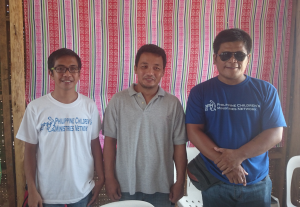
Pastors 2Three men sat opposite us, all three had a story to tell, all three had shared an experience I could only imagine. The kind of story that shows up both in dreams and nightmares. A strange mingling of terror and the miraculous. Each were pastors and each had lived through the typhoon and the accompanying tsunami. Each had lost friends, neighbours and members of their congregations but each had an amazing story to tell.
The first pastor began, he looked younger than me and when he smiled you could feel his kind spirit fill the room. He told us that he was in his home with his family when the typhoon started and as the waters began to rise he realised they needed to evacuate. He gathered up what he could of their possessions and prepared his family to leave but when he came to his grandad, his grandad said no. He told this young pastor, his grandson, to take his wife and to run, to leave him behind. That he was too slow and too old, that he would only slow them down. There wasn’t time to save them all. As I listened I thought of my dad at home in Ireland, I imagined him telling me to leave him behind, to run and save myself. Imagined him pushing me away, yelling at me to go and not to look back, his unconditional love overtaking. I looked at this pastor before me, his tears freely falling as he told us of his impossible choice. He knew time was running out for them but he also knew he wasn’t going anywhere without his grandfather. So he carried him on his back, through the storm and the howling wind, the beating rain and the rising waters and he saved his life and the lives of the rest of his family. He made what was at the same time an impossible choice and yet the easiest choice. To leave no one behind, to fight for survival, to fight for the people he loved and miraculously they all survived. They lost everything that night but as the next day dawned and a different struggle began they knew they had each other and that nothing could break the bonds of family and of love.

As this story sank in, the next pastor spoke, he told us that when he heard the typhoon was coming the first thing he did was go to his church and check on the people in his congregation. But he got caught in the storm and had nowhere to go. The tsunami had hit and as he swam to try and find safety he saw two children struggling in the water, separated from their parents, struggling to survive. He grabbed them, and carrying one on his back and another under his arm he swam them to a tree and the three of them clung for their lives to the top. They were battered by the wind, the gusts of this typhoon reaching over 200kph, but they survived, he saved their lives. In our world today we talk about superheroes, we watch movies about Captain America and Ironman and yet we sit in the presence of heroes everyday and don’t even notice. People like this man who put his life on the line for others. Who risked his own safety to put his church and his community first and who without a seconds thought saved the lives of two children with no thought for his own. This man who sat humbly between his friends, confused at the expressions of amazement that he met in our eyes.

The third pastor finally spoke, he had said very little while we were there and his expression had remained steady throughout. He looked at us from behind dark glasses, a towering figure at the end of the table. But as his story spilled out so too did his heart. He told us about his little girl, born just two months before the typhoon. He told us how during the typhoon the only place they had to go was the roof of their house.  He told us that his precious little girl survived the typhoon, she survived the cold and the rain, the wind and the chaos. She survived the three week wait for rescuers to reach their village. Her mother eating airdropped supplies of biscuits and packaged coffee to keep her own strength up so she could feed her baby until help arrived. He told us with beaming pride that today she is two and full of mischief and delights. A miracle baby who is blissfully unaware that she survived the worst typhoon in recorded history.

Each of these men struggled in the aftermath of the typhoon, with all they faced, the rebuilding of their churches and communities both physically and spiritually. The losses their villages had experienced, the trauma they had all faced. But they found strength in each other and in God. They meet each week and support each other, each understanding the pain they all feel and sharing in the trauma of what they had encountered. They were strangers before this typhoon but today they sat together as brothers, united by a bond that goes beyond friendship and kinship but to something much deeper and stronger.

And for a little while they invited us into that, they allowed us into their world. And what a beautiful world it is. A world where ordinary men became heroes and where those who have lost so much are the most grateful I have ever met.

I will never forget these pastors three, the hope they radiated, the thankfulness of their hearts and the humility in the heroics of their actions.

The legacy of Typhoon Haiyan

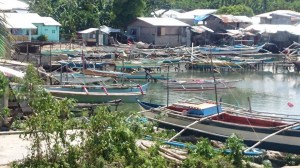
cropped-boats.jpgIt has been over two years since Typhoon Haiyan, one of the strongest typhoons in recorded history, devastated parts of the Philippines but even as I write this sentence I don’t think it can ever really capture what truly happened in the Philippines on November 8th 2013 or what has happened since and happens still every day.
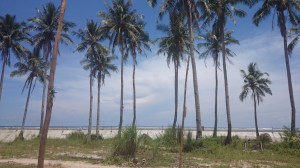
In September 2015 I spent 10 days travelling around Eastern Samar; one of the poorest regions in the Philippines and the area most affected by Typhoon Haiyan, known locally as Yolanda. Myself and my colleagues met with our partners who introduced us to the people they have been serving in the aftermath of this typhoon.

I learned many things during this trip, I learned about how our partner NGOs provide child friendly spaces for children. I learned that they are helping people to rebuild their livelihoods and send their children to school, that they are rebuilding homes and providing shelter. That they are advocating for child protection, for evacuation centres and stronger houses.

But what I really learned was how this happens and how behind each of these words or initiatives are people. People who work day and night to ensure that others have somewhere safe to live, who have left their own homes and families to move to a different part of the country so they can help communities rebuild their lives. People who keep going regardless of how tired they are, and who can still smile, in the face of coping with such tragedy. I met the people who benefit from this work, many who were already living in poverty before the typhoon struck. Often we speak of those affected by disasters but with so much going on in the world today, sometimes it is easy to forget that they are people; people with hopes and dreams who laugh and cry, who want their children to go to school and to have a home that is safe.

But standing on what is known as Ground Zero of the typhoon, looking out to the sea that now looked so calm and yet had ravaged so many communities and took so many lives I realised once again that people are at the heart of everything. And that I was in the company of extraordinary people.

PhilippinesI stood on the spot where 2000 people lost their lives, I visited a mass grave and walked by areas of beach where people had to be buried where they lay. And every time, without fail I was amazed by the resilience I saw in the midst of such sadness. The faith of pastors who as they told their stories cried whilst giving thanks to God for all they had. Even though they had lost everything. The farmer who had his whole livelihood wiped out but started again with nothing but a salvaged solar battery, and who now shares his farm with the community and teaches farming skills. The hope in a mothers eyes that her child will go to school even though the odds seem stacked against her.
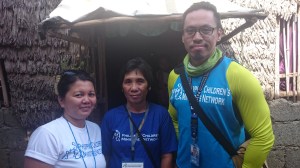
But this is the legacy of Typhoon Haiyan; that people who have lost so much are still going, are rebuilding their lives, are preparing for future disasters and are still, in the midst of everything thankful and turning their eyes upon God.

The following stories belong to the people of Eastern Samar, the unsung heroes of disaster; the social workers, the pastors and shepherds of every faith, the community workers, the anti-trafficking volunteers, the leaders of NGOs and the men, women and children who refuse to give up.

First published for Tearfund Ireland, in Teartimes, Autumn 2015 Edition

Extra ‘ordinary’ People

DandinEvery now and then you meet people who change your life, not dramatically or forcefully but just meeting them changes you. Changes how you see the world, how you see yourself.

I met many people like this in the Philippines. So many there isn’t time to write about them all. But they all shared one thing in common and this was selflessness. They all shared a deep desire to change the world around them, to respond to disaster not with fear and apathy but with hope and honour. And they did this in the everyday ordinary of life. But in that everyday, they made sacrifices. Some left their own families and children behind to move to a completely different part of the Philippines, to help those in need. They left everything that was safe and known to enter into the chaos and uncertainty of disaster relief. They took on another person’s burdens and laid their own to the side.

I stood in the middle of a mass grave speaking to one of these extraordinary people as he explained to me that when he first came to Eastern Samar he was horrified by the devastation that the typhoon had left behind. The pain and the grief of the people he met was inescapable. He had nightmares every night but he continued on, none the less. I asked him how he kept going, in those first few months when things were so difficult and he simply told me ‘it is my job, I am here to be strong’. And that was that. No other explanation was provided. He stood looking out to sea, the untold stories of so many buried around us, people who had lost their lives far too early and I understood. His needs were secondary, his priority were the people he served.

And he served them by getting up every morning to be in the field by 8am where he would meet with families struggling to survive, he worked all day until 6 and then by night wrote up his case notes of the day’s activities. He had 100 names of children on his list and he impacted the life of every single one of them and that of their families. He helped them to restart their lives through small businesses, he found homes for orphans, he showed parents how to keep their children safe from the ever present risk of trafficking, and how to protect themselves in future disasters.

But above all else, he gave them hope, hope that they could have a different future, that they are not resigned to poverty and destitution. And he showed them love. In a world where they are invisible and forgotten, where their own society shuns them and their government ignores them he showed them that they are important, they are special, they are loved. They are worth fighting for, they are worth the nightmares and the long hours. They are not a statistic on a long list of names, they are unique and they are eternally loved.

I think of the Philippines often as I look out from my office into the dark, grey skies of Dublin, wondering if anything I do makes a difference and his story reminds me that everything I do makes a difference. What that difference is, is my decision to make.

A Miracle

A young girl runs,
Out the door,
Away from the dark.
Can they see her,
She does not know.

She keeps running,
Never looking back.
She makes it to a telephone,
She doesn’t know what number to dial.
Where is she?
Everything around her is loud, car horns screech, people shout.

She picks up the receiver. She presses numbers, any numbers.
It rings, a woman answers.
Help me I am lost, they took me, they locked me up. I don’t know where I am. I want to go home.

Tell me what you see the lady says.
I see lights and men and buildings. It’s loud, I am afraid. They hurt me. I want to go home.

We will find you, don’t you worry. What is your name, where are you from?
Kindness speaks at the other end of the line.

The young girl tells her all she knows, her name, her parents, where she lived.
Kindness brightens up, I know you. I know your mother. We will find you, don’t you worry, you will be safe.

Kindness does not lie.

The young girl wakes, turns over, sees her mother’s tear filled eyes. She is safe, she is home, she is free.

Kindness did not lie.


A true story of a young girl rescued from a brothel in Manila. The lady who answered her call was a pastora from her village. They came, rescued her and brought her home. Today she is free.